I turned an idiyappam photograph into a fictional, routeable metro system with OpenCV, FastAPI, Next.js, and a 3D NoolVerse explorer.
- Next.js
- React
- FastAPI
- OpenCV
- PostgreSQL
- Three.js
- Docker
Third-year CS student at Sahrdaya · Kerala · Open to internships
I'm a third-year CS student at Sahrdaya in Kerala. I build practical AI systems, developer tools, and web products with Python, Rust, Next.js, and FastAPI.
I turned an idiyappam photograph into a fictional, routeable metro system with OpenCV, FastAPI, Next.js, and a 3D NoolVerse explorer.
Evidence-first AI-assisted review for handwritten examination papers. Teachers keep final authority while PRISM maps evidence, rubrics, confidence, and overrides.
Second Place — AI Innovation Hackathon 2026, Adi Shankara Institute of Engineering and Technology
Local-first Linux desktop assistant with visible tool calls, memory, voice, and a Codex project studio. It can run on local Vulkan models or an OpenAI-compatible cloud provider.
Recognition
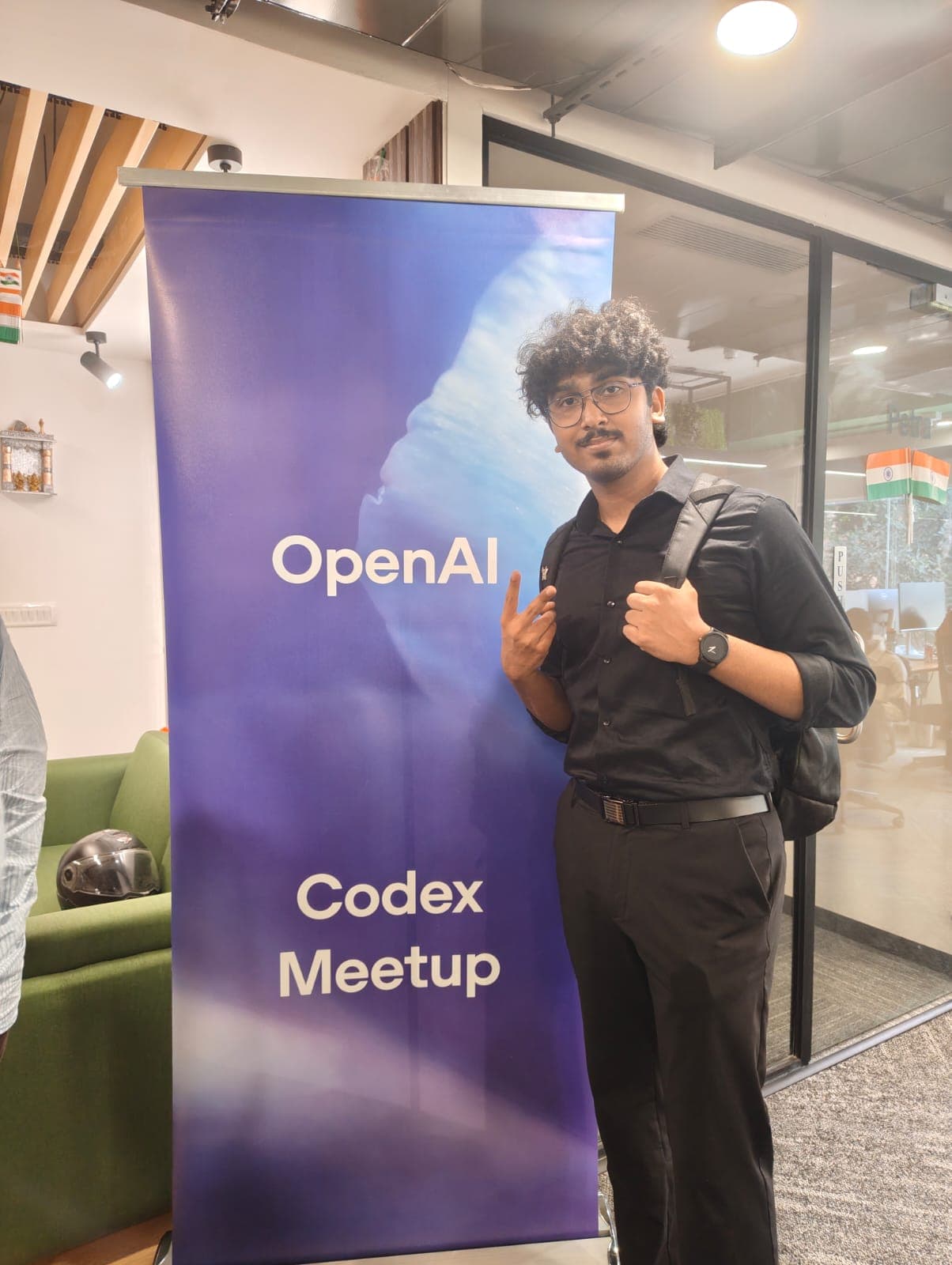
I took Thursday to the OpenAI Codex Community Hackathon in Bengaluru after selection from nearly 2,000 applications into around 60 seats. It was a chance to put a local-first desktop assistant in front of other builders, trade ideas, and keep improving the parts that make an agent trustworthy on a real computer.
@9MidhunPM
Live public profile · updates hourly
34
Public repos
30
Stars earned
11
Followers
3
Following
How I work
I start with the person who has to use the thing. For MetroMind, that meant someone standing at a station with a phone, not a diagram of an agent pipeline. The route search had to explain the next step clearly. Ticket booking had to survive a real website. WhatsApp had to be the place the answer arrived because that is where people already are.
Then I keep the stack boring where boring helps. FastAPI gives me a direct path from an idea to an API. Next.js is where I build interfaces that need to load quickly and stay understandable. Docker makes the handoff to my home server predictable. I reach for LangChain, browser automation, or a local model only when the problem needs it, not because the tool is new.
I care about the parts that show up after a demo. An agent needs useful failures, not a cheerful lie. A dashboard has to work on a small phone over bad campus wifi. A scraper needs to notice when the source site changed. I would rather spend an extra evening on logs, retries, and clear states than ship a screen that only works for me.
Most of my projects are learning tools as much as portfolio pieces. Building ETLab+ taught me what happens when real students rely on a service. Running an Ubuntu server taught me that deployment is not the last checkbox. Writing C++ without an engine keeps the abstractions honest. Every project leaves me with a better question for the next one.
That is also why I keep case studies and code public when I can. The interesting part is rarely the finished screenshot. It is the constraint, the wrong turn, the small fix that made the system usable, and the evidence that somebody came back to use it again.
Right now, I am looking for internship work where I can help ship a real feature and learn from the failures around it. I am most useful when there is a product problem to untangle, an API to make less fragile, or a deployment that needs to become repeatable. Recent hackathons have made me care even more about evidence-first AI: tools should show their work, respect a person’s control, and fail clearly. If the work touches backend systems, practical AI, or performance-sensitive code, I want to be in the room for it.
I built PRISM, an evidence-first handwritten-paper assessment workspace, in 24 hours at ASIET and won second place, a cash prize, and an internship offer.
I took Thursday, my local-first Linux desktop assistant, to OpenAI's Bengaluru Codex Community Hackathon after selection from nearly 2,000 applications.
I built Probe Interview for ABTalks' 48-hour VicoDathon sprint: a LangGraph system that turns learning history into grounded technical interview practice.
Have a project in mind, or just want to say hi?
My inbox is always open. I read everything, and I usually reply within a day.
Get in touch