Midhun P M — Case studyPRISM
- Next.js
- FastAPI
- SQLite
- Alembic
- OpenAI
- Docker
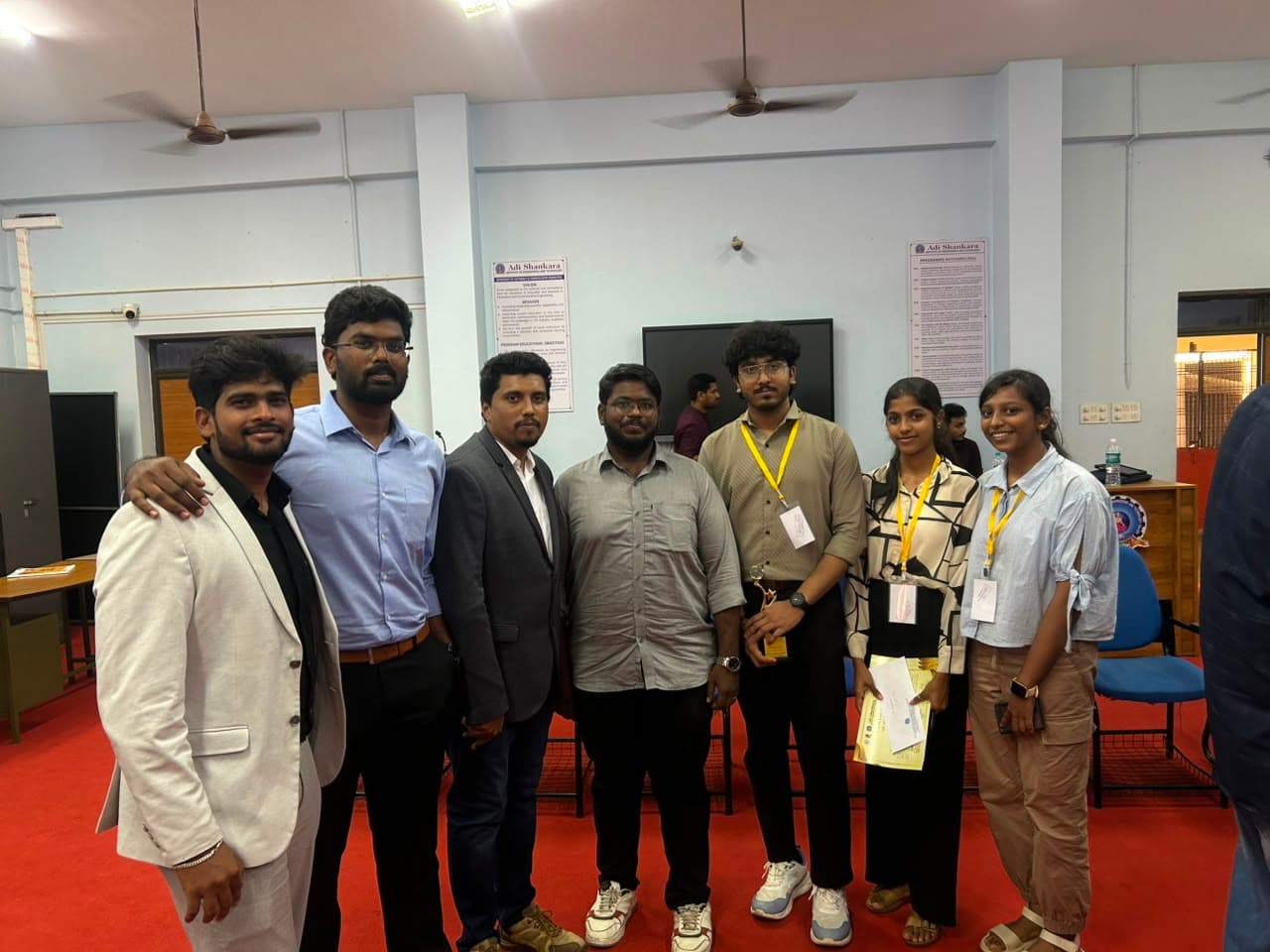
Second Place — AI Innovation Hackathon 2026, Adi Shankara Institute of Engineering and Technology
The problem
Teachers do more than add marks when they read handwritten exam papers. They reconstruct what a student wrote, map it to a rubric, assign partial credit, explain the decision, and find patterns across a class. A final score hides most of that work.
I built PRISM at the 24-hour AI Innovation Hackathon at Adi Shankara Institute of Engineering and Technology. The goal was not autonomous grading. It was giving teachers a review workspace that keeps every useful decision tied to evidence.
What I built
PRISM starts with a photographed or scanned paper and moves through a careful review path:
- Conservative paper processing keeps the original document while preparing pages for AI-assisted reading.
- Question mapping and criterion suggestions separate understanding the paper from assigning marks.
- Evidence and confidence review show the writing, rubric criterion, suggested score, and uncertainty together.
- Teacher overrides retain the AI suggestion and record the person’s final decision instead of hiding the disagreement.
- Learning signals turn saved criterion evaluations into student and class-level patterns without inventing personality or ability claims.
I built a Next.js frontend, FastAPI service, SQLite development store, Alembic migrations, and durable media handling. Every runtime AI operation uses an explicit typed contract. Backend code validates score bounds and calculates totals so a model never quietly does the arithmetic.
The guardrail that mattered
Handwriting is uncertain. So is partial credit. PRISM preserves visible mistakes and uses structured uncertainty when the paper does not support a confident reading. A low-confidence suggestion asks for review. It never becomes an automatic verdict.
That was the part I cared about most during the sprint. An assessment tool should make a teacher’s reasoning easier to inspect, not make a student’s future depend on a black box.
The result
PRISM won second place at the hackathon, along with a cash prize and an internship opportunity. The event’s top two teams were offered an internship with Enlight Wisdom, Chennai. The better outcome was leaving with a product direction I want to keep building: AI that gives people more evidence, not less control.